
One More Game
There is one match left.
That sentence alone would have sounded ridiculous a few weeks ago.
Malawi came to Morocco having never competed at the Women’s Africa Cup of Nations.
Now the Scorchers are preparing to play for the championship of Africa.
On Sunday, 16 August 2026, Malawi will face Cameroon in Rabat in the WAFCON final. CAF has scheduled the match for 20:00 local time.
One team will leave as African champions.
For the Scorchers, it is an opportunity to complete one of the most improbable tournament runs African women’s football has seen.
But Cameroon are not arriving as supporting characters in Malawi’s story.
They have written a remarkable one of their own.
Cameroon are back
The Indomitable Lionesses have history at this level.
This will be Cameroon’s first WAFCON final since 2016, when they lost to Nigeria.
But their 2026 route carries a particular edge.
Cameroon missed the previous WAFCON.
Now they are back in the final.
They opened the tournament by beating Mali 2–1, then defeated Ghana 1–0 and remained unbeaten through the group stage.
Then came Nigeria.
Cameroon had a terrible historical record against the Super Falcons. Before their quarter-final, CAF noted that Nigeria had dominated the rivalry across WAFCON history.
Cameroon won 1–0.
The defending champions were out.
The Indomitable Lionesses were going to the semi-finals.
Then Cameroon faced hosts Morocco.
The wall
Morocco could not score.
Not in 90 minutes.
Not in extra time.
The semi-final finished 0–0 after 120 minutes.
Then came goalkeeper Michaely Kyria Bihina.
Cameroon won the shoot-out 3–1, sending the host nation out of its own tournament and booking a place against Malawi.
If Malawi’s tournament identity has been attacking disruption, Cameroon’s has increasingly become defensive resistance.
That makes Sunday fascinating.
Malawi’s attack against Cameroon’s defence
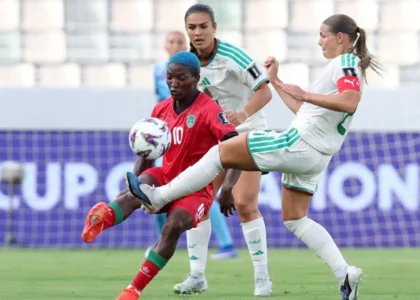
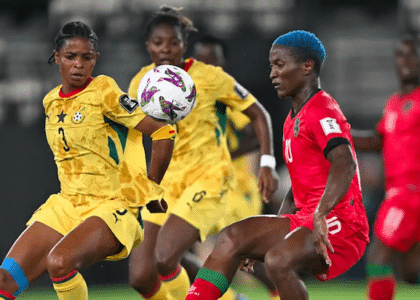
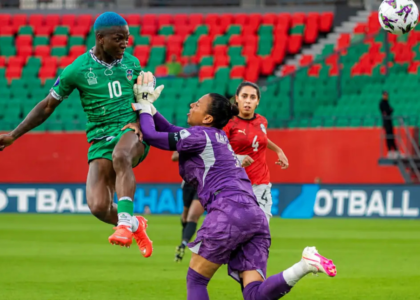
Through five matches, Malawi have scored 12 goals.
They have scored in every single game.
They have done it against Nigeria.
Against Egypt.
Against Zambia.
Against Ghana.
Against Algeria.
They have done it with eleven players and with ten.
They have done it while leading and while trailing.
They have done it with possession and without it.
Temwa Chaŵinga has scored five.
Tabitha has scored four.
Together, the sisters have produced nine of Malawi’s 12 goals.
But the remaining goals are important too.
Rose Kabzere scored against Egypt and Ghana.
Faith Chinzimu scored against Egypt.
That means Malawi cannot simply be reduced to “stop the sisters.”
Cameroon will know where the primary danger lies.
Knowing and stopping it are different things.
Temwa and space
If Cameroon defend deeply, one of their priorities will be denying Temwa the space she loves attacking.
Few players in world football are more dangerous when a defensive line becomes disorganised.
A turnover can become a Temwa run within seconds.
A misplaced pass can become a shot.
A defender who steps five metres too high can suddenly find herself chasing one of the fastest and most efficient forwards in the game.
Cameroon may therefore be tempted to sit lower than some of Malawi’s previous opponents.
But that creates another problem.
Tabitha can receive wider.
Kabzere can work between lines.
Faith can arrive from deeper positions.
Malawi have demonstrated enough variety in Morocco that the final cannot simply become eleven Cameroonian players watching Temwa.
Tabitha and the big moment
Then there is the captain.
Tabitha’s four tournament goals have come against Nigeria, Zambia and Algeria twice.
The semi-final showed the full range.
Her first goal required awareness and athletic reaction after the ball came off the bar.
Her second was a forceful left-footed finish.
For a Cameroon defence that has been extraordinarily difficult to breach, Malawi may not get ten clean chances.
The final could turn on one.
Tabitha has spent her career making one chance enough.
Mercy will probably be needed
Malawi have not kept a clean sheet in this tournament.
That statistic might seem worrying going into a final.
But it also explains why Mercy Sikelo matters so much.
She has made 19 saves through five games, including seven against Algeria and six against Nigeria.
The Scorchers have repeatedly survived periods when their opponents created pressure.
Against Algeria, the goalkeeper allowed Malawi’s attack enough time to win the match.
The same may be required on Sunday.
Cameroon are unlikely to gift Malawi complete territorial control.
There will be moments when the Scorchers have to suffer.
Sikelo has demonstrated that she can make those moments survivable.
The midfield battle may decide everything
Perhaps the least glamorous but most important question concerns midfield.
Can Malawi win enough second balls to release the attackers?
Cameroon’s route through Nigeria and Morocco demonstrates that they are comfortable playing matches in which patience matters.
They do not need chaos.
Malawi often thrive on it.
That creates a strategic contest.
Cameroon will want the match organised.
Malawi will benefit if it becomes stretched.
Every broken transition therefore matters.
Faith Chinzimu, Chikondi Gondwe, Madyina Nguluwe, Letticia Chinyamula and Fazili’s other midfield options may determine whether Malawi can get the match played at Scorcher speed rather than Cameroon speed.
And there is the matter of Rose Kabzere
Kabzere was sent off in the semi-final against Algeria.
Her availability for the final therefore depends on the applicable disciplinary suspension, and Malawi’s attacking setup will need adjustment if she is unavailable.
That would be meaningful.
Kabzere has started all five matches and scored twice, including the goal that secured Malawi’s World Cup qualification against Ghana.
But this tournament has already shown that Fazili possesses options.
Asimenye Simwaka has started knockout matches.
Vanessa Chikupila has repeatedly come from the bench.
Sabinah Thom, Madyina Nguluwe and others have been used in different game states.
Finals are rarely won by eleven players alone.
Cameroon know finals. Malawi know freedom.
This may be the most intriguing psychological contrast.
Cameroon have been here before.
They understand WAFCON history.
They understand the weight of continental expectations.
For Malawi, almost everything is new.
And perhaps that is an advantage.
There is no previous WAFCON final heartbreak to carry.
No national expectation built over generations of near-misses.
No requirement to restore a former championship.
Malawi have already exceeded every historical benchmark attached to the programme.
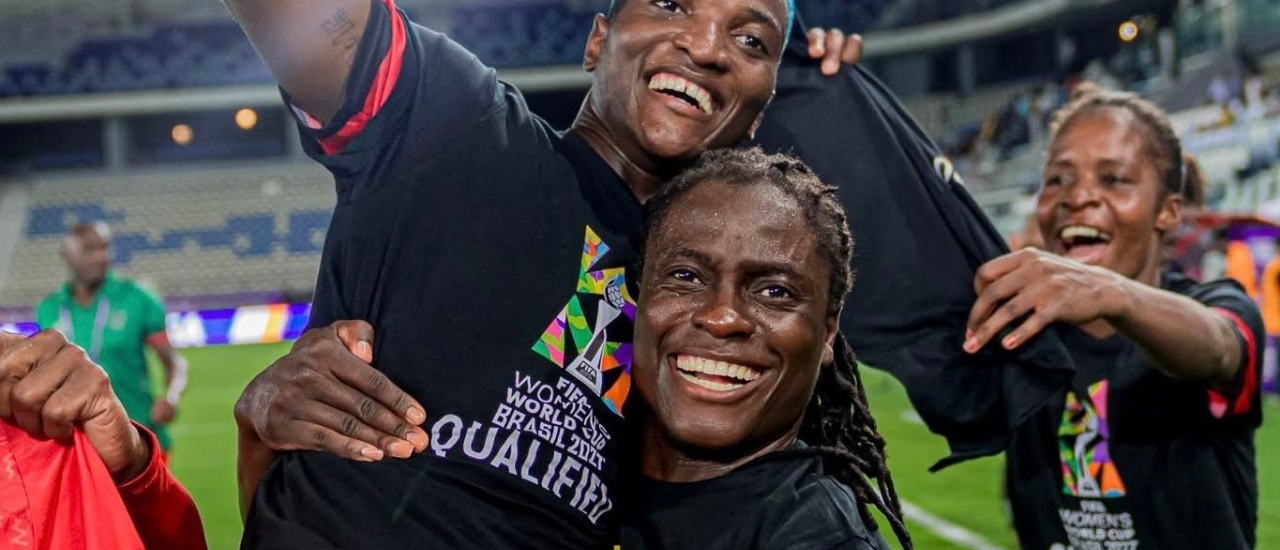
They are already World Cup-bound.
They are already finalists.
They are already the most successful senior Malawian national team ever to reach a FIFA World Cup.
That does not mean the final does not matter.
It means Malawi can play it with something dangerous:
freedom.
Why Malawi can win
There are legitimate football reasons to believe.
Malawi have beaten Nigeria.
Nigeria were the defending champions.
Cameroon also beat Nigeria.
Malawi have repeatedly created more shots on target than their possession share would predict.
They have scored 12 times.
Temwa and Tabitha are both in form.
Mercy Sikelo has repeatedly made high-volume saves.
Faith Chinzimu has already shown herself capable of producing decisive moments.
The team has recovered from a red card.
Recovered from conceding early.
Recovered from losing a group match.
Recovered from falling behind with World Cup qualification at stake.
This is not hope based purely on patriotism.
There is evidence.
The Scorchers are good.
But Cameroon can win too
There should be no mythology here.
Cameroon have reached this final because they deserve to be there.
They eliminated the most successful team in WAFCON history.
Then they kept the hosts scoreless for 120 minutes.
Bihina has become one of the tournament’s defining goalkeepers.
Cameroon know how to stay inside difficult matches.
If Malawi become impatient, the Lionesses can punish them.
If Malawi give away cheap transitions, Cameroon can punish them.
If the match reaches the final twenty minutes level, Cameroon have already demonstrated comfort under extreme knockout pressure.
This will be hard.
It is supposed to be.
It is the final of Africa.
One match from the cup
The Scorchers have already changed what is possible.
That is not hyperbole.
Malawi arrived at this tournament ranked 153rd in the world in FIFA’s June ranking and having never qualified for WAFCON.
They are leaving Morocco with a ticket to the World Cup.
The only unanswered question is whether they will leave with something else.
A trophy.
Imagine the photograph.
Tabitha Chaŵinga lifting the WAFCON trophy.
Temwa beside her.
Faith Chinzimu, who scored the goals that got Malawi into the tournament.
Rose Kabzere, who scored the goal that got Malawi to Brazil.
Mercy Sikelo, whose saves repeatedly kept the dream alive.
Twenty-six Scorchers.
African champions.
That future does not belong to Malawi yet.
Cameroon stand between the Scorchers and it.
But Sunday begins at 0–0.
And after everything Malawi have done over the past five games, nobody gets to tell this team that the impossible is too ambitious.
They have already beaten that argument.
One more game.
One more opportunity.
One more piece of history waiting to be written.
Malawi vs Cameroon.
For Africa.