
The Scorchers have made history!
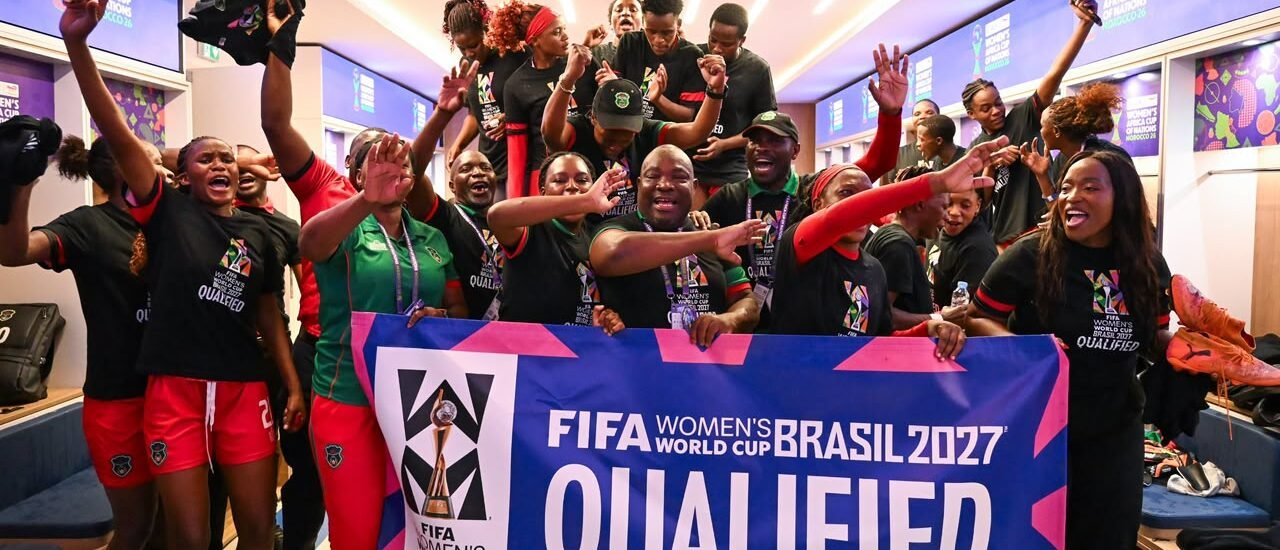
In their first-ever Women’s Africa Cup of Nations appearance, Malawi have qualified for the FIFA Women’s World Cup Brazil 2027.
For decades, a senior Malawian national football team had never reached a FIFA World Cup.
On 9 August 2026, that changed.
Malawi defeated Ghana 2–1 in Rabat in the quarter-finals of the CAF Women’s Africa Cup of Nations, securing a place in the WAFCON semi-finals and, with a goal from Temwa in the next game, an automatic qualification for the 2027 FIFA Women’s World Cup in Brazil. CAF confirmed that all four WAFCON semi-finalists qualify directly for Brazil under the tournament’s World Cup qualification format.
For the Scorchers, it was the latest chapter in a tournament that has already redrawn the boundaries of what Malawian football has achieved.
From WAFCON debutants to World Cup qualifiers
Malawi arrived in Morocco for their first-ever WAFCON.
Their opening assignment could scarcely have been harder: Nigeria, the defending champions and ten-time winners of the competition.
Malawi won.
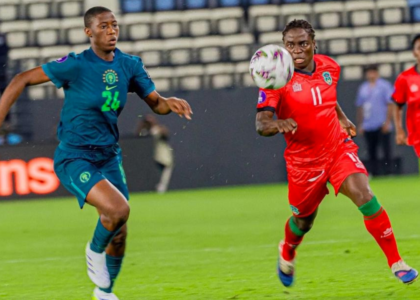
Temwa Chaŵinga scored twice. Tabitha Chaŵinga scored once. The Scorchers defeated Nigeria 3–2 and announced themselves to the continent not as ceremonial debutants, but as competitors.
They followed that with a 3–1 victory over Egypt, before suffering their first defeat of the tournament, 2–1 against Zambia.
Even with that loss, Malawi emerged from a three-way tie on six points at the top of Group C and advanced to the knockout stage as group winners. Their first three WAFCON matches had already produced seven goals and victories over two established continental opponents.
Then came Ghana.
Ninety minutes for a place in Brazil
The stakes were unusually simple.
Win the quarter-final, and Malawi would reach the World Cup.
Lose, and automatic qualification would disappear.
Ghana struck first in the seventh minute through Chantelle Boye-Hlorkah.
Malawi’s response took just five minutes.
Temwa Chaŵinga equalised in the 12th minute.
The match remained level deep into the second half. Ghana had another goal ruled out following VAR intervention. Then, in the 79th minute, the moment arrived.
Rose Kabzere scored.
Malawi led 2–1.
And this time, they did not let the advantage go.
At full time, the Scorchers had become WAFCON semi-finalists and FIFA Women’s World Cup qualifiers. CAF described it as Malawi’s first-ever qualification for the Women’s World Cup.
The symbolism of the winning goal was difficult to miss.
For much of the last decade, the international story of Malawian women’s football has been dominated by two extraordinary sisters.
Tabitha Chaŵinga became the first Malawian woman to play professional football in Europe and built a career across Sweden, China, Italy and France.
Temwa followed part of that pathway through Sweden and China before becoming one of the dominant players in the United States.
But the goal that actually sent Malawi to Brazil did not come from either sister.
It came from Rose Kabzere, one of the younger players emerging behind them.
That is what made the moment larger than individual greatness.
A pathway was becoming a generation.
A first for the senior game
CAF notes that Malawi’s qualification is only the second FIFA World Cup appearance by any Malawian national team at any level. The men’s under-17 team competed at the FIFA U-17 World Cup in 2009. No Malawian senior team — men’s or women’s — had previously reached a FIFA World Cup.
The Scorchers have now done it.
FIFA has confirmed that the 2027 Women’s World Cup will be staged in Brazil from 24 June to 25 July 2027.
For the first time, Malawi will be there.
And they did not stop there
World Cup qualification could easily have become the emotional endpoint of Malawi’s first WAFCON.
Instead, three days later, the Scorchers defeated Algeria 3–1 in the semi-final.
Tabitha scored twice.
Temwa scored once.
Malawi advanced to the WAFCON final.
Five matches into their first appearance at Africa’s premier women’s football tournament, Malawi had won four times, scored 12 goals, qualified for the World Cup and reached the continental championship match.
The numbers underline how unusual the run has been.
Through the semi-final, Malawi had averaged less than half of possession yet produced more total shots and more shots on target than their opponents collectively. They had scored in every game. They had conceded in every game. They had won from positions of adversity, survived suspensions and red cards, and repeatedly turned limited possession into high-value attacking opportunities.
This has not been a tournament built on control.
It has been built on danger, response and belief.
Brazil awaits
The Scorchers still have business in Morocco.
On 16 August, Malawi will contest the WAFCON final against Cameroon. CAF has confirmed that it will be the first WAFCON final for both nations in the current era, guaranteeing a new African champion.
Whatever happens in that match, one part of the story is already permanent.
Malawi is going to Brazil.
A country that had never appeared at WAFCON before 2026 will now walk onto the biggest stage in women’s football.
And when the Scorchers step onto a World Cup pitch in 2027, they will do so carrying more than the history made in Morocco.
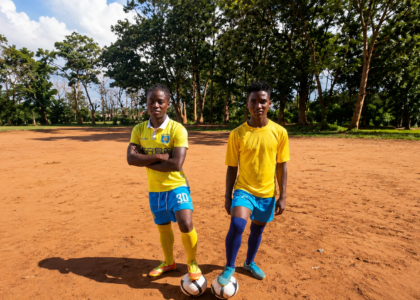
They will carry every football pitch in Malawi on which a girl once had to explain why she was there.
They will carry the players who built the game when there was almost no professional pathway to follow.
They will carry the generations coming behind them.
For the first time in senior Malawian football history, the road leads to a World Cup.
Brazil 2027. Malawi will be there.